

Tile Trends in Contemporary Bathroom Design
Tile remains one of the most influential elements in bathroom renovation. Beyond its practical role in moisture protection, tile defines texture, color, and spatial perception. In contemporary bathroom design, tile trends reflect a shift toward clean geometry, natural finishes, and intentional contrast. When selected carefully, tile elevates both aesthetics and long-term durability.
Large-Format Tiles for Seamless Surfaces
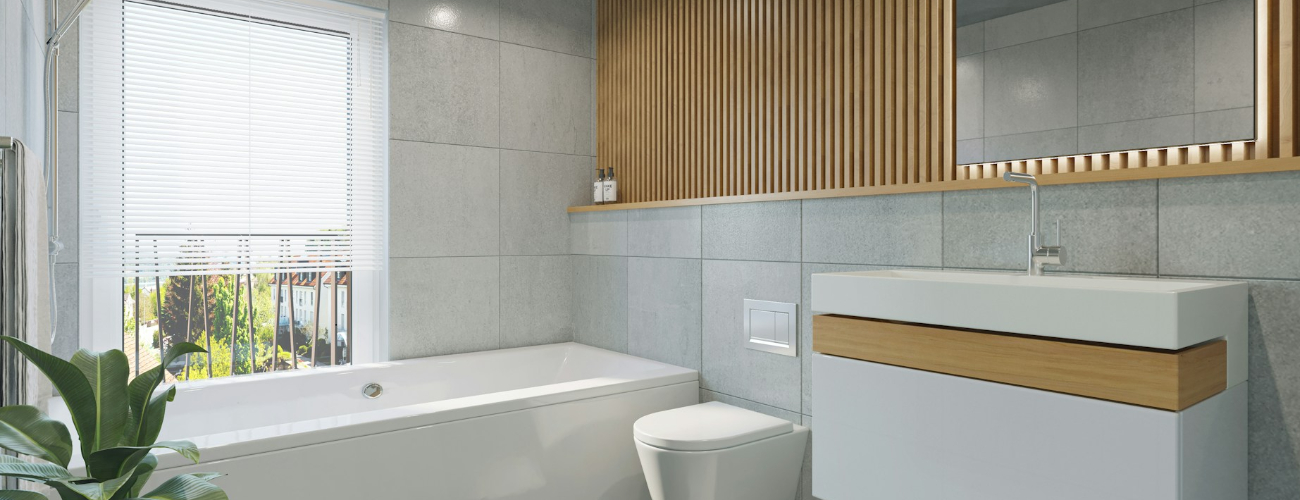
One of the strongest trends in modern bathrooms is the use of large-format tiles. Oversized porcelain or ceramic slabs reduce grout lines, creating a more continuous and refined surface. This approach enhances visual openness, particularly in smaller bathrooms where minimizing pattern interruptions makes the space feel larger.
Large tiles are frequently used on both floors and walls to create cohesive surfaces. Neutral shades such as soft gray, warm beige, and matte white dominate, reinforcing minimalist design principles.
Natural Stone and Stone-Look Finishes
Natural stone continues to influence contemporary tile choices. Marble, limestone, and travertine bring organic texture and subtle variation into bathroom spaces. However, porcelain tiles that replicate stone are increasingly popular due to their durability and lower maintenance requirements.
Stone-look tiles provide the elegance of natural materials while offering improved resistance to staining and moisture. This balance between aesthetic appeal and practicality aligns with modern renovation priorities.
Textured and Three-Dimensional Tiles
While smooth surfaces remain prevalent, textured tiles are gaining attention as accent features. Three-dimensional wall tiles introduce depth and shadow, especially when paired with directional lighting.
Ribbed, fluted, or geometric relief patterns are often used behind vanities or in shower niches. These textures add character without overwhelming the overall design. When applied strategically, they create focal points while maintaining visual balance.
Bold Patterns and Statement Floors
Although contemporary design favors simplicity, bold tile patterns are sometimes introduced in controlled ways. Statement floors featuring geometric or encaustic-inspired designs provide contrast against neutral walls.
In smaller powder rooms, patterned tiles can become a defining feature without dominating the entire home. The key is moderation—combining a bold floor with understated wall finishes maintains cohesion.
Vertical and Linear Layouts
Tile orientation significantly affects spatial perception. Vertical stacking of rectangular tiles emphasizes ceiling height, making rooms feel taller. Linear layouts with slim grout lines enhance the clean aesthetic associated with modern design.
Stacked subway tiles, rather than traditional staggered patterns, have become more common in contemporary bathrooms. This alignment creates sharper, more structured visual lines.
Matte Finishes and Subtle Color Palettes
Glossy surfaces are gradually giving way to matte finishes. Matte tiles reduce glare and provide a softer, more sophisticated look. They also complement brushed metal fixtures and natural materials.
Color trends favor muted tones—sage green, charcoal, warm taupe, and soft clay. These hues introduce personality while preserving a calm atmosphere.
Practical Considerations
Slip resistance remains essential, particularly for flooring. Textured or matte surfaces improve safety in wet areas. Additionally, high-quality grout selection and proper sealing ensure long-term performance.
Coordinating tile with lighting and fixture finishes enhances the overall design outcome.
A Contemporary Foundation
Tile trends in contemporary bathroom design reflect a balance between minimalism and subtle expression. Large-format surfaces, natural textures, and thoughtful patterns create environments that feel modern yet timeless.
By selecting materials that align with both design vision and functional requirements, homeowners can achieve bathrooms that remain visually relevant and structurally resilient for years to come.