

Overcoming Challenges in Ceiling Leveling
Leveling a ceiling is a crucial step in home renovation that can dramatically affect the outcome of your interior design. Whether it’s for aesthetic appeal, structural integrity, or preparation for further enhancements, getting the ceiling right is essential. However, the process can be fraught with challenges, especially in older homes or those with significant structural issues. This comprehensive guide explores the most common challenges homeowners face when leveling ceilings and provides practical solutions for overcoming them.
Challenge 1: Identifying Unevenness
One of the primary difficulties in ceiling leveling is simply identifying which parts of the ceiling are uneven. This problem is particularly prevalent in older homes where years of settling have occurred.
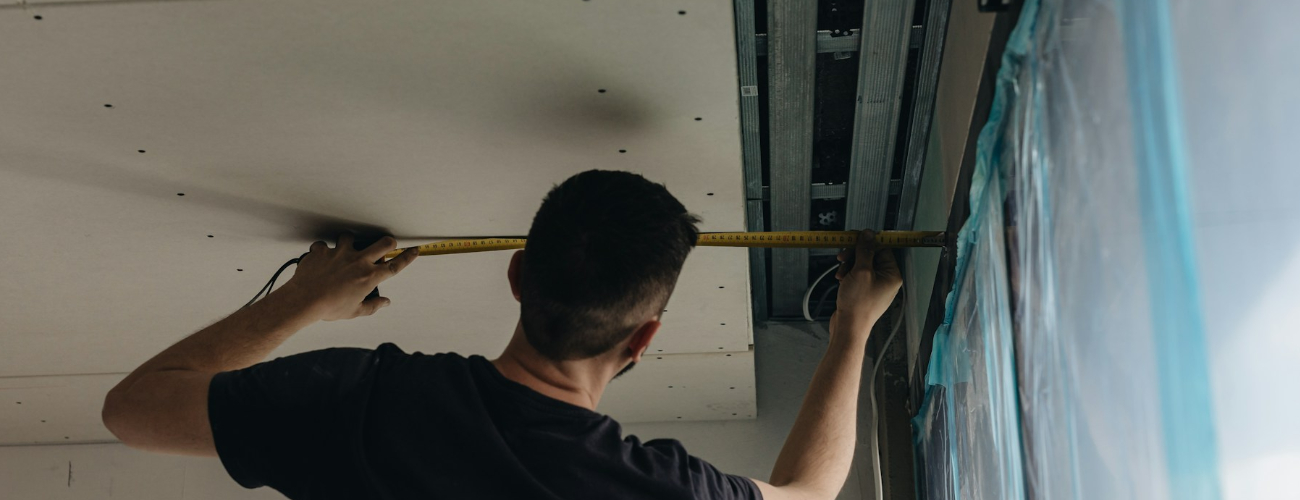
- Solution: Use a laser level to detect uneven spots accurately. This tool projects a straight line onto the surface, revealing deviations from flatness. For a more low-tech approach, you can use a long straightedge or a stretched string across the surface. Mark any gaps between the tool and the ceiling to pinpoint uneven areas.
Challenge 2: Dealing with Structural Problems
In some cases, a ceiling may be uneven due to underlying structural issues, such as sagging joists or water damage.
- Solution: Before any cosmetic fixes, address the structural integrity. This might involve reinforcing ceiling joists, replacing water-damaged sections, or consulting a structural engineer to ensure the home is safe and sound. Only once these issues are resolved should you proceed with cosmetic leveling.
Challenge 3: Material Inconsistency
Different materials used in previous repairs or initial construction can cause inconsistencies in texture and level. Plaster, for instance, may settle differently than modern drywall.
- Solution: Remove layers of old, mismatched materials and replace them with a consistent material, typically drywall, across the entire ceiling. This ensures uniformity and makes it easier to achieve a level surface.
Challenge 4: Achieving a Smooth Finish
Once structural issues are addressed and the ceiling is made even, achieving a perfectly smooth finish can be another hurdle, especially for those new to drywall or plaster work.
- Solution: Use the right tools and techniques for finishing. Apply a skim coat of plaster or joint compound over the entire ceiling, sanding between layers until smooth. Consider using a drywall sander attached to a vacuum to minimize dust and simplify cleanup.
Challenge 5: Working Around Fixtures
Ceiling fixtures like lights, fans, and vents can complicate the leveling process, requiring precise cuts and fittings.
- Solution: Temporarily remove fixtures where possible to allow for easier access and a more uniform application of materials. For non-removable fixtures, use a drywall keyhole saw to make accurate cuts. Ensure that all fittings are properly sealed and supported.
Challenge 6: Time and Labor Intensity
Ceiling leveling can be a time-consuming and physically demanding task, especially when doing large areas or entire rooms.
- Solution: Plan the project in stages to manage fatigue and ensure quality. If the project is too large to handle alone, consider hiring professionals. The investment can save time, reduce stress, and yield better results.
Challenge 7: Dust and Mess
Leveling and sanding ceilings generate a significant amount of dust, which can be a nuisance and a health hazard.
- Solution: Minimize dust by sealing the room with plastic sheeting and using dust-extraction tools. Wear protective gear such as masks and goggles. Set up a fan with an exhaust out the window to help control dust.
Conclusion
Ceiling leveling is a complex but rewarding task that can transform the look and feel of a room. By understanding and preparing for the common challenges associated with this project, homeowners can ensure a smoother renovation process. Whether you choose to DIY or hire a professional, addressing these issues methodically and with the right tools will lead to a successful outcome, enhancing both the beauty and value of your home. Remember, a flat and smooth ceiling is not only visually appealing but also forms a vital base for further decorative enhancements.