

How to Choose the Right Kitchen Layout for Your Home
The kitchen is often referred to as the heart of the home, a place where both meals and memories are made. Choosing the right layout for your kitchen is crucial because it affects not just the aesthetics of the space but also its functionality and efficiency. Whether you are building a new home or remodeling an existing kitchen, understanding how to select the appropriate layout can make all the difference. This comprehensive guide will help you navigate the options and considerations for choosing the best kitchen layout that suits your home and lifestyle.
Understanding Kitchen Layouts
The layout of your kitchen should cater to your cooking habits, lifestyle, and the overall flow of your home. Here are the most common kitchen layouts, along with their benefits and potential drawbacks:
L-Shaped Layout
- Description: This layout features cabinets and counters arranged along two perpendicular walls, forming an L shape.
- Benefits: It is ideal for small to medium-sized kitchens, offering an efficient work triangle and the potential to add a dining area or an island.
- Considerations: Ensure that corner space is utilized effectively with carousel or lazy Susan solutions to avoid inaccessible areas.
U-Shaped Layout
- Description: Also known as a horseshoe layout, this design has cabinets along three walls.
- Benefits: It provides plenty of counter and cabinet space, making it ideal for larger kitchens where multiple people cook together.
- Considerations: This layout can feel enclosed if not planned well. Consider opening up one side with a breakfast bar or lowering a section for an open feel.
Galley Layout
- Description: This layout consists of two parallel runs of units forming a central corridor in which to work.
- Benefits: The galley layout is highly efficient for cooking due to its compact size and symmetry.
- Considerations: It can be cramped and may not allow for much interaction with family or guests. Good lighting is crucial in a galley kitchen to avoid a corridor-like effect.
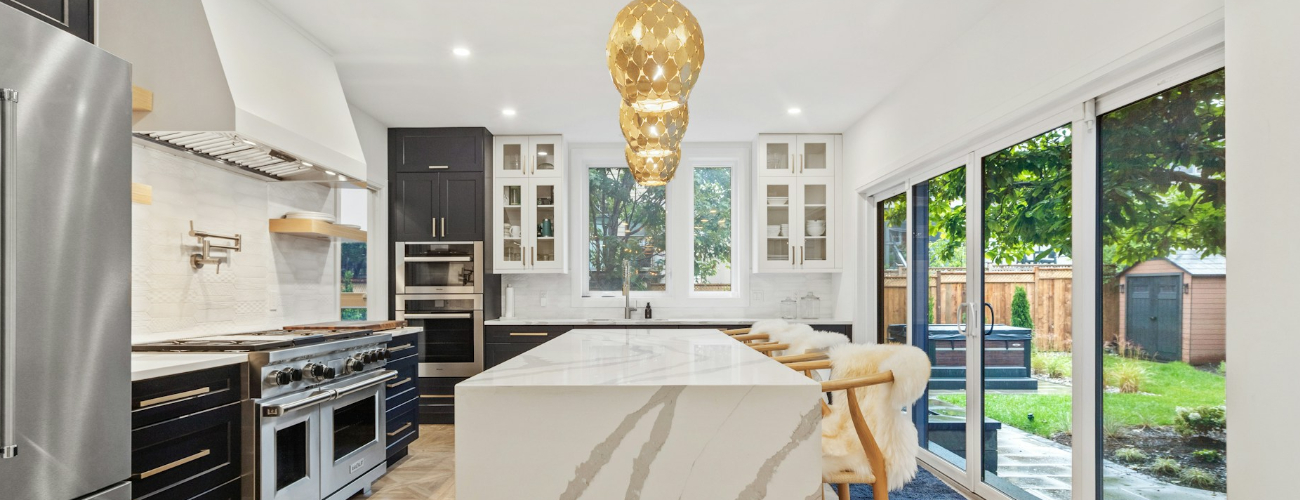
Island Layout
- Description: An island layout features a standalone cabinetry unit in the middle that complements the existing workspace.
- Benefits: Islands can provide additional prep areas, storage, and seating, and often become the focal point of the kitchen.
- Considerations: Ensure there is enough room around the island for easy movement. Ideally, paths around the island should be at least 36 inches wide, with 42 inches being ideal for households with multiple cooks.
Peninsula or G-Shaped Layout
- Description: This layout adds a peninsula to any of the aforementioned layouts and is connected to the main kitchen area on one end.
- Benefits: Peninsulas provide extra counter space and storage, a barrier for kitchen traffic, and additional seating for casual meals.
- Considerations: Like the island, a peninsula requires sufficient space to allow for comfortable traffic flow.
Factors to Consider When Choosing a Kitchen Layout
- Size and Shape of the Room: Measure the kitchen space to determine which layouts are possible. Remember, overly crowded kitchens can become a nuisance rather than a pleasure.
- Work Triangle Efficiency: The work triangle (stove, sink, refrigerator) should promote efficiency, with no single side of the triangle too long or too short.
- Storage Needs: Consider your storage requirements. Upper and lower cabinets, a pantry, or even a freestanding armoire can affect which layout will work best.
- Lighting: Good lighting is essential. Consider natural light sources and where to add additional lighting to avoid shadows on work surfaces.
- Traffic Flow: Think about how people will move in and out of the kitchen. Avoid layouts that disrupt the workflow or that place major traffic paths between the workspace and the appliances.
Conclusion
Choosing the right kitchen layout is a pivotal decision in home design. It impacts not just the look of your kitchen, but its functionality, your enjoyment while cooking, entertaining, and interacting with family and friends. By understanding the different layouts and considering your specific needs and the physical constraints of your kitchen area, you can select a layout that enhances your home’s efficiency and aesthetic appeal. Remember, the best kitchen layout for you is one that fits your lifestyle, meets your functional needs, and makes your kitchen a joyful and efficient space to cook and live in.