

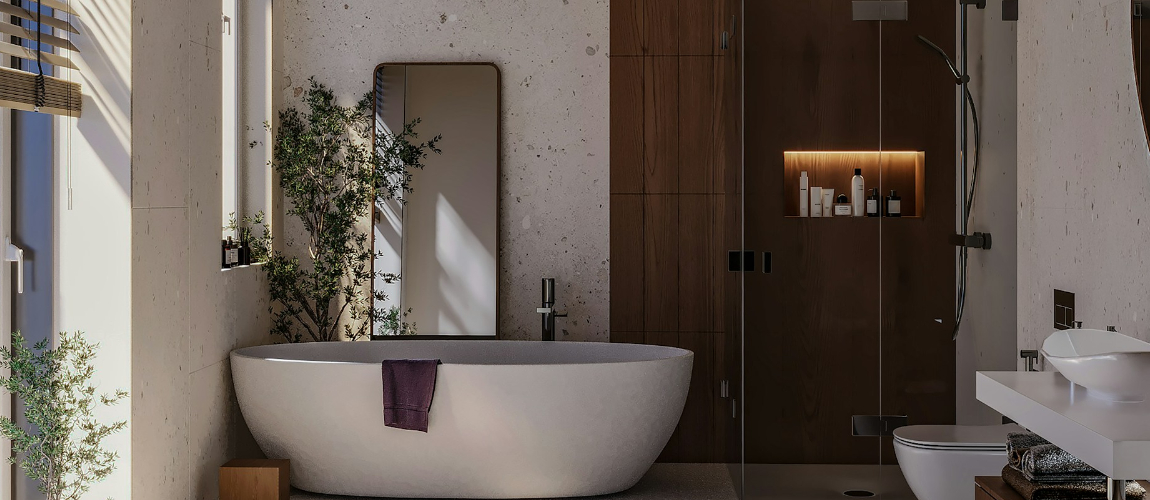
How Bathroom Size Affects Design Decisions
Bathroom size plays a critical role in shaping design choices, functionality, and overall comfort. From compact powder rooms to spacious primary bathrooms, the available square footage influences everything from layout and fixture selection to lighting and storage solutions. Understanding how bathroom size impacts design decisions helps create spaces that are both efficient and visually appealing.
Small Bathrooms: Prioritizing Efficiency and Simplicity
In small bathrooms, every inch matters. Design decisions must focus on maximizing functionality while maintaining a sense of openness. Compact layouts often require careful planning to ensure essential elements—such as the toilet, sink, and shower—fit comfortably without feeling crowded.
Wall-mounted vanities, floating shelves, and recessed storage are commonly used to free up floor space. Choosing smaller-scale fixtures and streamlined hardware helps prevent visual clutter. Light color palettes, reflective surfaces, and large mirrors are especially important in small bathrooms, as they enhance brightness and make the room appear larger than it actually is.
Medium-Sized Bathrooms: Balancing Comfort and Function
Medium-sized bathrooms offer more flexibility while still requiring thoughtful planning. These spaces allow for a wider range of fixture sizes and layouts, such as larger vanities, combination tubs and showers, or double sinks in shared bathrooms.
Design decisions in medium bathrooms often focus on balance. Storage can be more generous without overwhelming the space, and decorative elements can be introduced more freely. Zoning becomes important, separating wet and dry areas to improve flow and usability. Material choices, lighting layers, and accent features can be used to add personality while preserving practicality.
Large Bathrooms: Emphasizing Luxury and Zoning
Large bathrooms provide opportunities for luxury-focused design, but size alone does not guarantee success. Without proper planning, oversized bathrooms can feel empty or inefficient. Design decisions in larger spaces often revolve around creating distinct zones for bathing, grooming, and relaxation.
Freestanding tubs, walk-in showers, seating areas, and double vanities are common features in spacious bathrooms. Lighting design becomes more complex, with multiple layers required to ensure even illumination throughout the room. Material selection plays a significant role as well, as textures and finishes help define areas and prevent the space from feeling overly expansive or impersonal.
Fixture Selection Based on Bathroom Size
Bathroom size directly influences fixture selection. Small bathrooms benefit from compact toilets, narrow vanities, and sliding or pocket doors to conserve space. In larger bathrooms, standard or oversized fixtures can be used comfortably without restricting movement.
The scale of fixtures should always align with room proportions. Oversized fixtures in small bathrooms can feel overwhelming, while undersized fixtures in large bathrooms may appear out of place. Maintaining visual balance ensures the design feels intentional and cohesive.
Storage Strategies for Different Bathroom Sizes
Storage needs vary significantly depending on bathroom size. Small bathrooms rely on vertical storage, recessed niches, and multifunctional furniture to stay organized. Medium and large bathrooms can incorporate linen closets, built-in cabinetry, and under-vanity storage without sacrificing comfort.
Regardless of size, storage should be integrated seamlessly into the design. Clutter-free bathrooms feel larger, calmer, and more inviting.
Lighting and Color Considerations
Bathroom size also affects lighting and color choices. Smaller bathrooms benefit from brighter lighting and lighter colors to enhance openness. Larger bathrooms allow for more contrast, layered lighting, and dramatic materials, but still require adequate illumination to avoid shadowed areas.
Designing Bathrooms That Fit the Space
Successful bathroom design begins with understanding how size shapes every decision. By aligning layout, fixtures, storage, and finishes with available space, bathrooms of any size can feel functional, comfortable, and visually refined. Thoughtful design ensures that whether large or small, a bathroom works efficiently and enhances the overall home.