

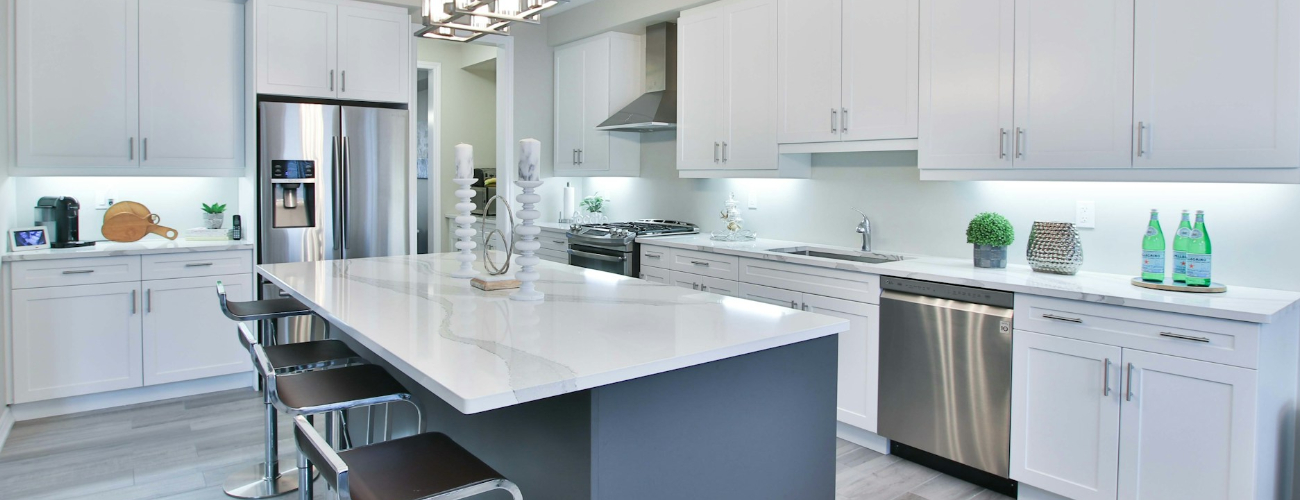
Tips for Choosing a Kitchen Countertop
Selecting the right kitchen countertop is crucial as it significantly influences the functionality, aesthetic appeal, and overall vibe of your kitchen. The countertop is not just a surface for meal preparation; it’s a focal point of kitchen design, a significant investment, and a defining element of the kitchen’s usability. This comprehensive guide provides detailed tips on choosing a kitchen countertop that suits your style, meets your functional needs, and fits within your budget.
Understanding the Different Materials
Granite
- Pros: Natural look, very durable, heat resistant.
- Cons: Requires periodic sealing to prevent stains, can be expensive.
Quartz
- Pros: Non-porous, vast range of colors, mimics natural stone, maintenance-free.
- Cons: Can be pricey, not as heat resistant as natural stone.
Marble
- Pros: Timeless beauty, naturally cool, perfect for baking prep.
- Cons: Porous, prone to staining and scratching, requires regular maintenance.
Laminate
- Pros: Cost-effective, available in various colors and patterns, easy to clean.
- Cons: Not heat resistant, can scratch and chip easily, not as durable.
Solid Surface
- Pros: Seamless design, comes in a myriad of colors and patterns, stain-resistant.
- Cons: Not heat resistant, can scratch.
Butcher Block
- Pros: Adds warmth, ideal for cutting, can be sanded and resealed.
- Cons: Needs frequent sanitizing and oiling, can be damaged by water and heat.
Concrete
- Pros: Customizable, durable, offers a unique, industrial look.
- Cons: Must be sealed properly, can develop cracks, somewhat porous.
Stainless Steel
- Pros: Heat resistant, hygienic, professional look.
- Cons: Can dent, noisy, shows fingerprints.
Soapstone
- Pros: Rich, deep color, somewhat heat resistant, develops an antique-like patina.
- Cons: Requires regular oiling, can scratch and chip.
Key Factors to Consider
Durability and Maintenance
Choose a material that can withstand the demands of your kitchen activities. Consider how much maintenance you are willing to undertake. Materials like quartz offer ease of maintenance, whereas marble and granite require more care to prevent stains and damage.
Aesthetics
Think about the visual impact of your countertop material and how it complements other elements in your kitchen, such as cabinetry and flooring. Countertops come in various patterns, colors, and textures, so select one that aligns with your kitchen’s style.
Budget
Set a realistic budget. Materials can range from relatively inexpensive laminates to high-end marbles. Remember to factor in the cost of installation, which can vary depending on the complexity and material.
Lifestyle
Consider your lifestyle and how you use your kitchen. Families with young children might prioritize durability and ease of cleaning, while avid cooks may value a surface like granite or stainless steel for its heat resistance and durability.
Resale Value
Think about the potential resale value your countertop choice might add to your home. High-quality materials like granite and quartz often attract homebuyers and may increase your home’s market value.
Installation Tips
- Measure Correctly: Ensure accurate measurements to avoid costly mistakes. Consider hiring a professional for precise measurements.
- Professional Installation: Especially for heavy or intricate materials like granite and quartz, professional installation is recommended to ensure a perfect fit and avoid damage.
- Sealing and Finishing: Some materials, like natural stone and concrete, require sealing. Ensure this is part of the installation process to protect your investment.
Conclusion
Choosing the right kitchen countertop involves balancing functionality, style, and budget. By understanding the pros and cons of each material and considering how it fits into your lifestyle and kitchen design, you can select a countertop that not only looks great but also satisfies your daily kitchen needs. Remember, the right countertop can dramatically enhance your kitchen’s efficiency and style, making it a joy to use for years to come.