

Selecting Lighting for Hallways and Staircases
Hallways and staircases are often overlooked during home renovation, yet they play a critical role in both safety and overall design continuity. Proper lighting in these transitional spaces improves visibility, prevents accidents, and enhances the architectural character of the home. Thoughtfully selected lighting transforms hallways and staircases from purely functional areas into visually appealing design elements.
Understanding the Function of Transitional Spaces
Hallways and staircases serve as connectors between rooms and levels, meaning their lighting must support frequent movement at all hours. Unlike living spaces, these areas require consistent and reliable illumination to ensure safety. At the same time, lighting should complement the home’s overall aesthetic rather than feeling utilitarian or harsh.
Prioritizing Safety and Visibility
Safety is the primary concern when lighting staircases and hallways. Adequate brightness reduces the risk of trips and falls, particularly on stairs where depth perception is essential. Evenly distributed lighting eliminates shadows and dark corners. Fixtures should be positioned to clearly define each step, landing, and turn without causing glare.
Layered Lighting for Balanced Illumination
Layered lighting is an effective approach for transitional spaces. Ambient lighting provides overall illumination, while accent lighting highlights architectural features such as handrails, artwork, or wall textures. In staircases, step lights or wall-mounted fixtures add both safety and visual interest, creating a smooth flow of light from one level to the next.
Ceiling Fixtures and Recessed Lighting
Ceiling-mounted fixtures are a common choice for hallways, offering consistent illumination without occupying wall space. Recessed lighting works particularly well in narrow corridors, maintaining a clean and unobtrusive appearance. Proper spacing is essential to avoid uneven lighting or overly bright spots.
Wall Sconces and Directional Lighting
Wall sconces add character and depth to hallways and staircases. Positioned at eye level or slightly above, they provide soft, indirect lighting that enhances ambiance while maintaining visibility. Directional sconces can guide movement along hallways and draw attention to design details such as stair rails or textured walls.
Step and Handrail Lighting
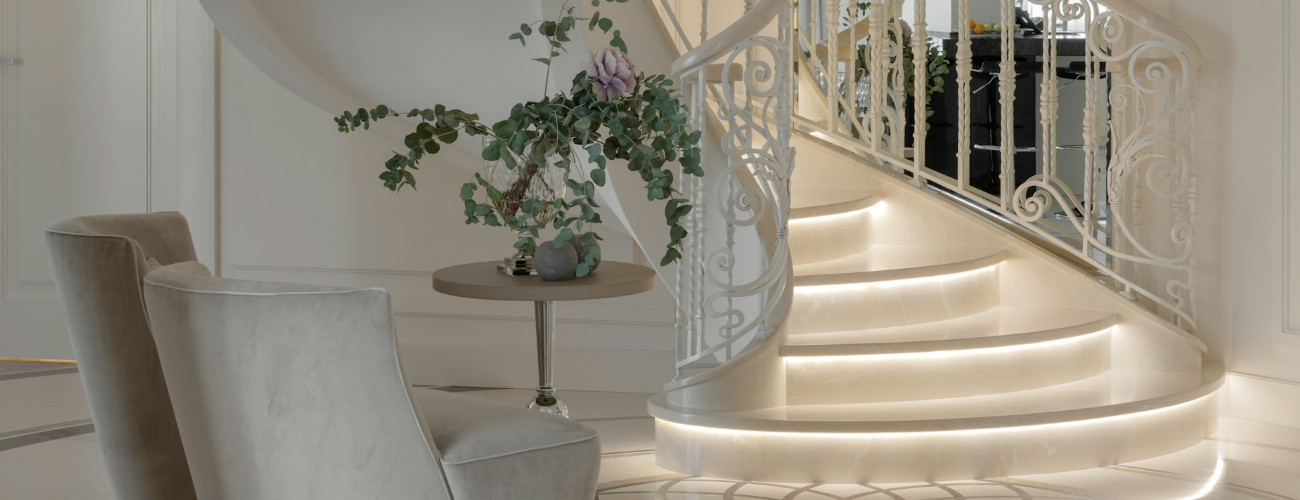
Integrated step lighting is a practical and elegant solution for staircases. LED lights installed along stair risers or under handrails clearly define each step, improving safety while adding a modern touch. These low-profile fixtures are particularly effective in contemporary and minimalist interiors.
Choosing the Right Color Temperature
Light color temperature significantly impacts how hallways and staircases feel. Warm white lighting creates a welcoming and cohesive atmosphere, especially in residential settings. Maintaining consistent color temperature throughout connected spaces helps preserve visual flow and avoids abrupt transitions.
Smart Lighting Controls
Smart lighting solutions enhance convenience and efficiency in transitional areas. Motion sensors automatically illuminate hallways and staircases when movement is detected, reducing energy use and improving nighttime safety. Dimmers and programmable controls allow brightness adjustments to suit different times of day.
Enhancing Architectural Features
Lighting can be used to emphasize architectural elements such as staircases with open risers, vaulted hallways, or decorative moldings. Accent lighting adds depth and highlights craftsmanship, turning functional spaces into design statements.
Conclusion
Selecting the right lighting for hallways and staircases requires balancing safety, functionality, and aesthetics. Through layered lighting, thoughtful fixture placement, and smart controls, these transitional spaces can become both secure and visually engaging. Well-designed lighting ensures smooth movement throughout the home while enhancing its overall character and design cohesion.