

The Best Lighting Layouts for Bathrooms
Bathroom lighting is about more than visibility — it’s about creating a space that feels clean, functional, and relaxing. Whether you’re getting ready in the morning or winding down with an evening bath, the right lighting layout can completely change your experience. A well-designed plan blends practicality with comfort, highlighting mirrors and architectural features while ensuring safety and balance. Here’s how to create a bathroom lighting layout that’s both stylish and effective.
Understanding Bathroom Lighting Needs
Bathrooms serve multiple purposes — grooming, showering, and relaxation — each requiring different lighting conditions. Because of this, a single ceiling fixture is rarely enough. A thoughtful layout combines layered illumination: ambient, task, and accent lighting. Together, these layers eliminate shadows, enhance visibility, and create an inviting atmosphere.
Ambient Lighting — The Foundation
Ambient lighting provides the overall illumination that evenly brightens the bathroom. It’s your base layer — the one that ensures you can move around comfortably. Recessed ceiling lights are the most common choice because they provide clean, unobtrusive light that works in both modern and traditional spaces. For a softer, more diffused look, consider flush or semi-flush ceiling fixtures with frosted glass shades.
If your bathroom has high ceilings, a small chandelier or pendant can add elegance without overpowering the space. However, always choose fixtures rated for damp or wet locations. To prevent shadows, distribute recessed lights evenly across the ceiling and position them away from directly above the vanity, where they can cast unflattering downward shadows on the face.
Task Lighting — Clarity Where You Need It Most
Task lighting focuses on areas that require precision, such as the vanity mirror. This layer is crucial for shaving, applying makeup, or skincare routines. The best vanity lighting comes from fixtures placed at face level on both sides of the mirror — ideally 28 to 36 inches apart. This placement provides even illumination across the face, eliminating harsh shadows under the eyes or chin.
Vertical wall sconces are ideal for this purpose, especially those with frosted or opal glass shades to diffuse light evenly. If side placement isn’t possible, install a horizontal fixture directly above the mirror, around 75 to 80 inches from the floor, ensuring it emits soft, shadow-free light. LED mirrors with built-in lighting are another excellent option for a clean, modern look and energy efficiency.
Accent Lighting — Depth and Style
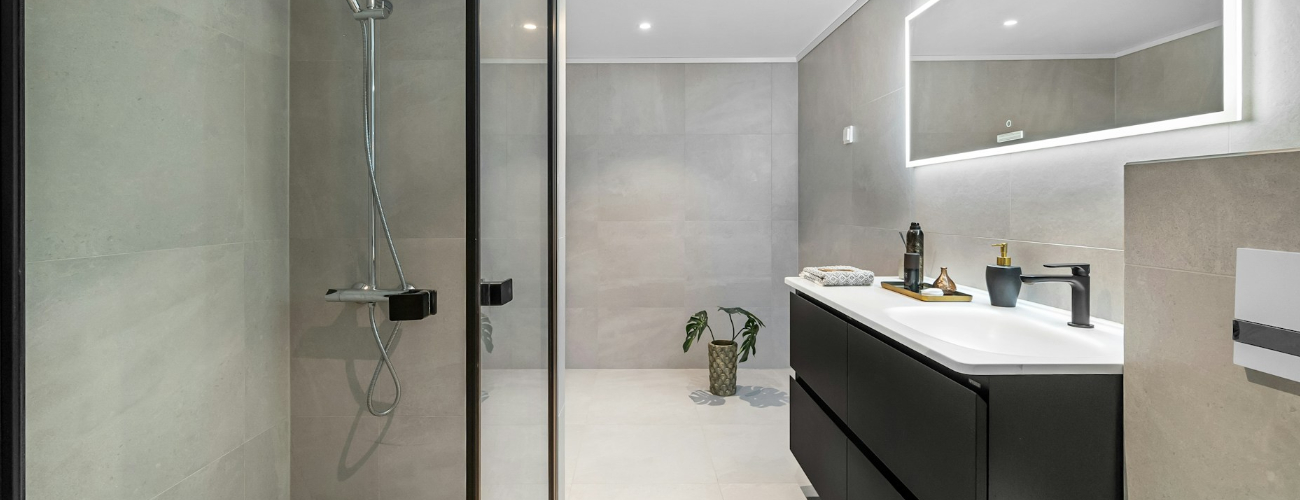
Accent lighting adds dimension and a sense of luxury to your bathroom. It highlights architectural details, textured walls, or decorative elements such as niches and freestanding tubs. LED strip lights under floating vanities, around mirrors, or along ceiling coves create a subtle glow that elevates the atmosphere.
If your bathroom includes a soaking tub, consider installing a dimmable pendant or small chandelier overhead to create a spa-like mood. Recessed spotlights directed at artwork or decorative tilework can also enhance visual interest. The goal of accent lighting is not brightness but ambiance — a soft, layered glow that makes the space feel refined and restful.
Shower and Wet Area Lighting
Wet zones require special attention for both safety and aesthetics. Recessed waterproof fixtures rated for wet locations are best suited for showers and steam rooms. Position the lights toward the wall rather than directly overhead to avoid glare and ensure even illumination. If your shower has glass doors or tiled niches, LED strip lighting can highlight these features beautifully.
For larger bathrooms, consider adding a separate light over the bathtub to distinguish it as a focal point. Dimmable controls let you transition from bright, practical light for cleaning to soft illumination for relaxing soaks.
Balancing Light Temperature and Controls
Color temperature significantly affects bathroom mood and functionality. Choose bulbs between 2700K and 3000K for a warm, inviting glow, or around 3500K for a balanced, natural white suitable for grooming. Avoid overly cool tones (above 4000K), as they can make skin tones appear pale and harsh.
Dimmers are essential in bathroom lighting layouts, offering flexibility for different times of day. Bright light suits morning routines, while softer levels are ideal for evening relaxation. Motion sensors or smart lighting controls can further enhance convenience and energy efficiency.
Design Harmony and Fixture Style
While function comes first, lighting should also complement your bathroom’s design. Sleek chrome or brushed nickel fixtures suit modern spaces, while brass and matte black finishes add warmth and contrast to contemporary or vintage-inspired interiors. Ensure that all metal finishes — faucets, handles, and lights — harmonize for a cohesive look.
Conclusion
The best bathroom lighting layout strikes a balance between functionality and atmosphere. Layered lighting — ambient for brightness, task for precision, and accent for style — ensures that the room feels both practical and inviting. Combine thoughtful placement with dimmable, warm-toned fixtures to create a flexible environment that supports your daily routine and relaxation rituals alike. With the right layout, even a small bathroom can feel luxurious, balanced, and beautifully illuminated.