

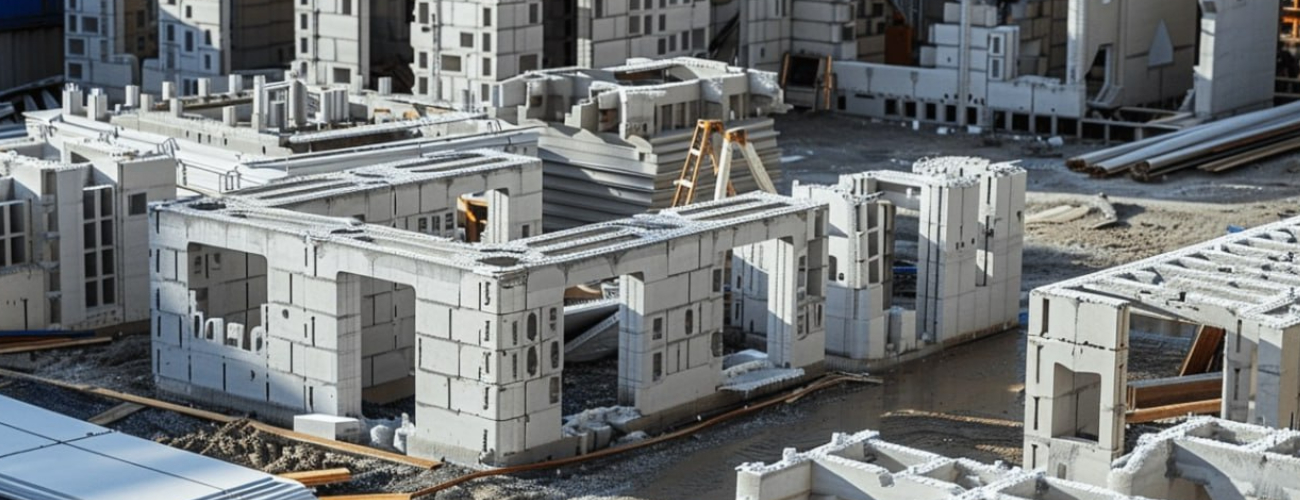
Revolutionizing Home Renovation with 3D Printed Materials
In recent years, 3D printing technology has moved beyond crafting small, detailed objects to playing a significant role in the construction industry, especially in home renovation projects. This technology’s ability to create complex, highly customized building materials quickly and efficiently is transforming the way homeowners approach renovations. This post delves into how 3D printing is revolutionizing the field of home renovation, offering new possibilities for customization, cost reduction, and sustainability.
Understanding 3D Printing in Construction
3D printing, or additive manufacturing, involves creating three-dimensional objects from a digital file by layering material. In construction, this usually means concrete or a concrete-like material, layered precisely to build walls and other structural elements of a building without the traditional forms or molds.
Advantages of 3D Printed Building Materials
- Customization: One of the most significant benefits of 3D printing in home renovation is the level of customization it offers. Designers and homeowners can create unique architectural features that would be too complex or too costly to manufacture by traditional means. From custom-designed tiles to intricate facades, 3D printing makes it possible to personalize a space truly.
- Speed: 3D printing can significantly accelerate the construction process. Components can be printed off-site and assembled on-site, or entire sections of a home can be printed directly at the location in a fraction of the time required for traditional construction methods.
- Cost-Effectiveness: Although the initial investment in 3D printing technology can be high, it can ultimately lead to cost savings by reducing labor costs and minimizing waste. 3D printers use only the amount of material needed, cutting down on the excess commonly associated with bulkier, traditional construction techniques.
- Sustainability: 3D printing promotes sustainability in construction through efficient material use and the potential to use recycled materials. For example, concrete debris can be recycled into the printing mix, reducing waste and environmental impact.
- Strength and Durability: 3D printed materials can be designed to be as strong as or stronger than those made through traditional construction methods. The layering process allows for precise control over the structure, which can enhance the material’s strength properties without additional weight.
Real-World Applications in Home Renovation
Innovative applications of 3D printing in home renovation are already underway:
- Structural Components: In areas prone to natural disasters, homes can be designed with 3D printed materials that have specific properties such as flexibility or extra strength, providing enhanced resistance to earthquakes or hurricanes.
- Aesthetic Elements: Interior design elements such as bespoke wall panels, custom light fixtures, and even furniture are being 3D printed, allowing for a level of detail and design cohesion previously difficult to achieve.
- Restorations: For historic home renovations, 3D printing can replicate ornate period features such as cornices, molding, and even stained glass, preserving the aesthetic integrity of the building while incorporating modern materials.
Challenges and Future Prospects
Despite its benefits, 3D printing in construction faces challenges. Regulatory hurdles, the need for standardization in building codes, and initial costs are significant barriers. Moreover, there are technical challenges related to the scale of printing and the material properties required for larger structures.
As the technology advances and becomes more accessible, these challenges are likely to diminish. Future developments could see more widespread adoption of 3D printing in mainstream home renovations, further democratizing personalized design and potentially altering the landscape of residential construction.
Conclusion
The revolution of 3D printed building materials is set to reshape home renovation, offering a new realm of possibilities for efficiency, customization, and sustainable design. As more homeowners and professionals adopt this technology, the future of home renovation looks poised to become more creative, less wasteful, and more aligned with individual homeowner needs and environmental considerations. This exciting frontier in construction technology demonstrates not just a leap in innovation but a potential shift in how we think about building the spaces we live in.