

Open vs. Partitioned Attic Layouts
Attic renovations present unique design challenges due to sloped ceilings, limited headroom, and irregular floor plans. One of the most important decisions during an attic remodel is choosing between an open layout and a partitioned layout. Each approach affects how the space feels, functions, and adapts to long-term needs. Understanding the advantages and limitations of both layouts helps create an attic that is both practical and visually appealing.
Understanding Open Attic Layouts
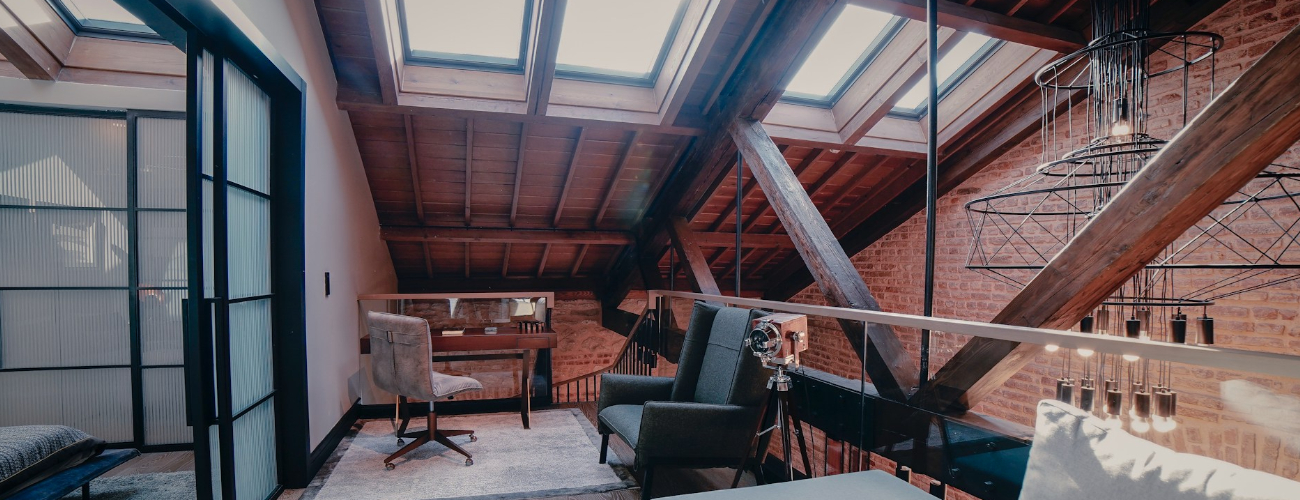
An open attic layout minimizes interior walls and relies on a single, continuous space. This approach is commonly used for loft-style bedrooms, studios, home offices, or multipurpose living areas. By removing visual barriers, open layouts emphasize volume and architectural features such as exposed beams or rooflines.
Open layouts are especially effective in smaller attics, where walls can quickly make the space feel cramped. Natural light from skylights or roof windows spreads evenly, making the attic feel brighter and more expansive.
Advantages of Open Attic Layouts
One of the main benefits of an open layout is the sense of spaciousness it creates. Without partitions interrupting sightlines, the attic appears larger and more open than its actual square footage. This layout also allows for flexible furniture arrangements and easy future adjustments, as the space is not tied to fixed room functions.
From a design perspective, open attics feel modern and cohesive. They work well for creative uses such as art studios, yoga rooms, or guest spaces where privacy is less critical. Open layouts also simplify construction, often reducing framing costs and shortening renovation timelines.
Drawbacks of Open Attic Layouts
Despite their openness, these layouts have limitations. Privacy is the most common concern, particularly if the attic is used as a bedroom or shared living space. Noise travels easily in open layouts, which may be disruptive in homes with multiple occupants.
Heating and cooling can also be more challenging. Large, open attic spaces may require additional insulation or specialized HVAC solutions to maintain consistent temperatures. Storage and organization may feel limited without defined rooms unless built-in solutions are carefully planned.
Understanding Partitioned Attic Layouts
Partitioned attic layouts divide the space into separate rooms using walls or partial partitions. This approach is often chosen when the attic is converted into bedrooms, bathrooms, or a combination of private and functional spaces. Partitioning allows each area to serve a specific purpose while improving comfort and usability.
In larger attics, partitioned layouts help control circulation and create more conventional room proportions, making the space feel like a natural extension of the home.
Advantages of Partitioned Attic Layouts
The primary advantage of partitioned layouts is privacy. Separate rooms are ideal for bedrooms, home offices, or guest suites where quiet and separation are important. Partitioning also improves sound control and makes it easier to regulate temperature in individual areas.
Defined rooms allow for better storage planning, including closets and built-in cabinetry. From a resale perspective, partitioned attics with clearly defined bedrooms or bathrooms often appeal to buyers seeking functional living space.
Drawbacks of Partitioned Attic Layouts
The biggest drawback of partitioned layouts is the potential loss of openness. Walls can block natural light and make sloped ceilings feel more restrictive. In smaller attics, excessive partitioning may result in narrow or awkwardly shaped rooms.
Construction costs are typically higher due to additional framing, electrical work, and finishes. Careful planning is required to ensure that partitions align with structural constraints and building code requirements.
Finding the Right Balance
In many attic renovations, a hybrid approach offers the best solution. Partial partitions, sliding doors, or glass walls can provide separation without sacrificing light and openness. Combining open and enclosed areas allows the attic to adapt to multiple uses while maintaining comfort and visual flow.
Choosing the Best Layout for Your Attic
The decision between open and partitioned attic layouts should reflect how the space will be used now and in the future. Open layouts favor flexibility and visual impact, while partitioned layouts prioritize privacy and structure. With thoughtful planning and design, either approach can result in a functional, attractive attic that enhances the overall home.