

How Proper Lighting Transforms Interior Spaces
Lighting is often underestimated during renovation projects, yet it is one of the most influential elements in interior design. Proper lighting does far more than illuminate a room—it shapes perception, enhances functionality, and defines atmosphere. A well-planned lighting scheme can make compact spaces feel expansive, highlight architectural details, and significantly improve everyday comfort.
The Role of Lighting in Spatial Perception
One of the most powerful effects of lighting is its ability to alter how a space feels. Bright, evenly distributed light can visually expand a room, while poorly positioned fixtures may create harsh shadows that make it feel smaller. Layered lighting—combining ambient, task, and accent illumination—ensures balance and depth.
Ambient lighting provides general illumination. This includes recessed ceiling fixtures, flush mounts, or indirect LED systems. Task lighting focuses on specific functional areas, such as kitchen countertops, desks, or bathroom vanities. Accent lighting, meanwhile, highlights architectural features, artwork, or textured surfaces. When these layers work together, the space gains dimension and clarity.
Enhancing Architectural Features
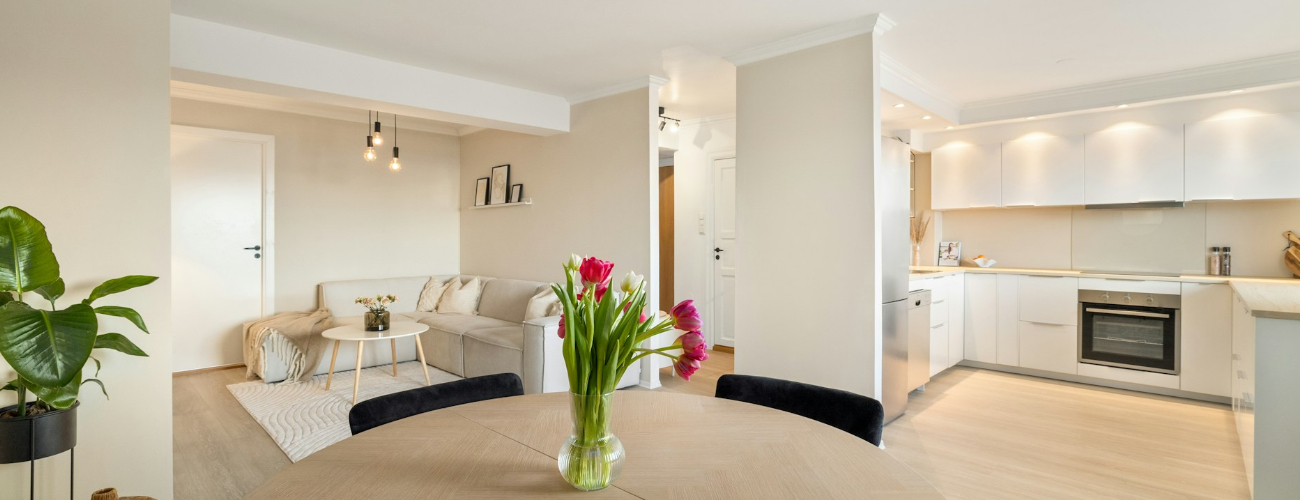
Strategic lighting emphasizes design elements that might otherwise go unnoticed. Wall washers can draw attention to textured finishes like brick or stone. Under-cabinet lighting in kitchens not only improves usability but also creates subtle contrast that defines the cabinetry layout. Cove lighting along ceilings adds a refined architectural detail while softening the overall atmosphere.
In open-concept layouts, lighting can define functional zones without physical partitions. Pendant fixtures over a dining table or island establish clear boundaries between cooking, dining, and living areas, maintaining openness while improving organization.
Color Temperature and Mood
Choosing the correct color temperature is critical. Warm light (approximately 2700–3000K) creates a welcoming, relaxed atmosphere, ideal for living rooms and bedrooms. Neutral light works well in kitchens and bathrooms where clarity is important. Cooler light temperatures are often used in workspaces to promote focus and visibility.
Consistency is essential. Mixing drastically different color temperatures within one area can disrupt the visual flow and create discomfort. During renovation, planning lighting temperature alongside material selections ensures a cohesive result.
Energy Efficiency and Modern Technology
Modern lighting upgrades frequently incorporate LED technology. LEDs consume less energy, generate less heat, and offer longer lifespans compared to traditional incandescent or halogen bulbs. Dimmable systems add flexibility, allowing homeowners to adjust brightness based on time of day or activity.
Smart lighting systems have also become increasingly popular. Automated controls, motion sensors, and programmable settings enhance convenience while improving energy efficiency. These solutions integrate seamlessly into contemporary renovation projects without compromising aesthetics.
Lighting as a Design Statement
Beyond functionality, lighting fixtures themselves can act as focal points. Sculptural pendants, minimalist linear fixtures, or understated recessed lights each influence the character of a room. However, balance remains important. The goal is not to overwhelm the space but to complement its proportions and materials.
In minimalist interiors, lighting often remains subtle and integrated. In more expressive designs, decorative fixtures may become central visual elements. Regardless of style, proper scale and placement are crucial to achieving harmony.
Practical Considerations During Renovation
Early planning is vital. Electrical layouts should be coordinated with cabinetry, furniture placement, and ceiling structures. Retrofitting lighting after finishes are complete can increase costs and limit design flexibility. Considering lighting during the initial stages of renovation ensures optimal results.
Natural light should also be maximized whenever possible. Enlarged windows, skylights, and glass partitions enhance brightness and reduce dependence on artificial lighting. The combination of natural and artificial illumination creates a balanced and comfortable environment.
A Transformative Investment
Proper lighting is not merely an accessory to interior design—it is a transformative tool. By carefully selecting fixture types, placement strategies, and color temperatures, homeowners can significantly enhance both aesthetics and usability. Thoughtfully designed lighting improves mood, increases functionality, and elevates the overall quality of a space.
In renovation projects of any scale, investing in a comprehensive lighting plan ensures that every architectural element and material choice is fully realized.