

Heated Flooring Installation Guide
Heated flooring, also known as radiant floor heating, is an increasingly popular feature in modern home design. It offers consistent warmth and enhances comfort, especially in colder climates. Whether you are considering heated floors for a bathroom, kitchen, or the entire home, understanding the installation process is key to ensuring efficiency and long-term performance. This guide walks you through the basics of heated flooring installation.
Types of Heated Flooring Systems
There are two main types of radiant floor heating systems:
Electric Radiant Floor Heating:
- Utilizes electric cables or mats installed beneath the flooring surface.
- Ideal for small spaces like bathrooms or kitchens.
- Easier and less expensive to install in existing homes.
Hydronic Radiant Floor Heating:
- Uses hot water pumped through tubing beneath the floor.
- More efficient for heating large areas or entire homes.
- Typically installed during new construction or major renovations due to its complexity.
Step-by-Step Installation Process
Planning and Design:
- Determine which rooms will benefit from heated flooring.
- Choose between electric or hydronic systems based on the size of the space and budget.
- Consult with a heating specialist or contractor to create a layout plan.
Prepare the Subfloor:
- Ensure the subfloor is clean, level, and dry.
- For electric systems, an insulating layer or underlayment may be installed to improve energy efficiency.
- For hydronic systems, the subfloor may need to be modified to accommodate tubing.
Install Heating Elements:
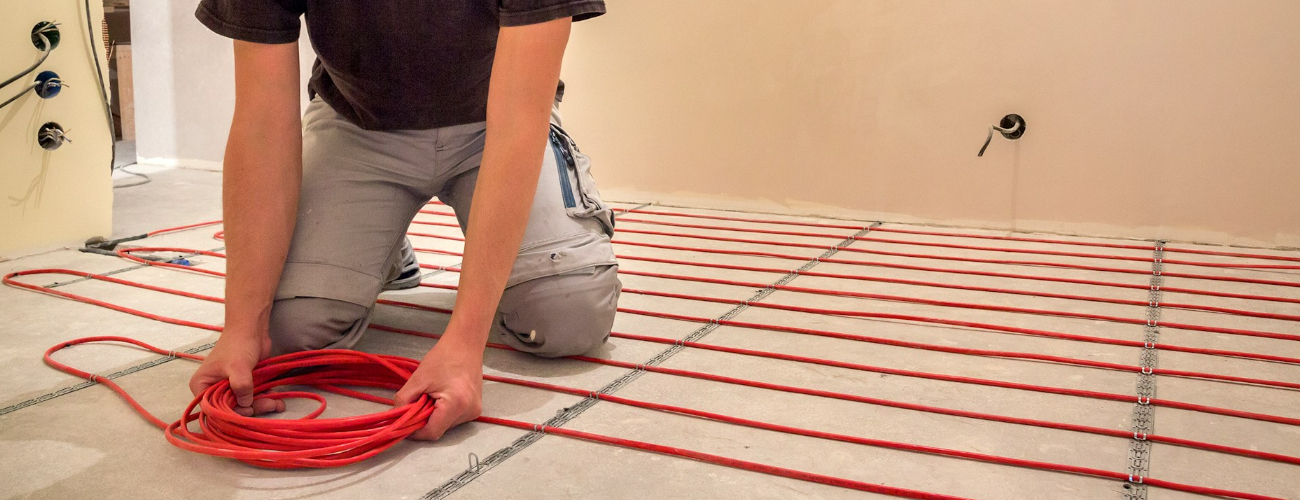
- Electric Systems: Roll out heating mats or lay electric cables according to the manufacturer’s instructions. Secure them to the subfloor using adhesive or staples.
- Hydronic Systems: Install flexible tubing in loops or patterns across the subfloor. Connect the tubing to a central manifold that links to the boiler or water heater.
Connect the System:
- Electric Systems: Connect the heating cables or mats to a thermostat and power supply. A licensed electrician should handle all electrical connections.
- Hydronic Systems: Connect the tubing to the boiler or water heater. Ensure proper pressure testing is conducted to check for leaks.
Test the System:
- Before covering the heating elements, test the system to ensure it is working properly. This step helps identify any issues early.
Install Flooring Material:
- Carefully install the chosen flooring material (tile, laminate, engineered wood) over the heating system.
- Tile and stone are ideal materials for radiant heating due to their thermal conductivity.
Final Testing:
- Once the flooring is installed, perform a final test to ensure the heating system operates efficiently.
Benefits of Heated Flooring
- Comfort: Provides even heat distribution and eliminates cold spots.
- Energy Efficiency: Radiant heating can be more efficient than traditional forced-air systems.
- Silent Operation: No noisy fans or blowers.
- Design Flexibility: No need for visible radiators or vents, allowing for cleaner interior designs.
Maintenance Tips
- Regular System Checks: Periodically check the system to ensure it is functioning correctly.
- Thermostat Management: Use programmable thermostats to optimize energy usage.
- Professional Inspections: Have the system inspected by a professional if you notice any irregularities.
Conclusion
Installing heated flooring can significantly enhance the comfort and value of your home. Whether you choose an electric or hydronic system, careful planning and proper installation are essential for long-lasting performance. Always consult with experienced professionals to ensure your heated flooring system meets safety standards and operates efficiently.