

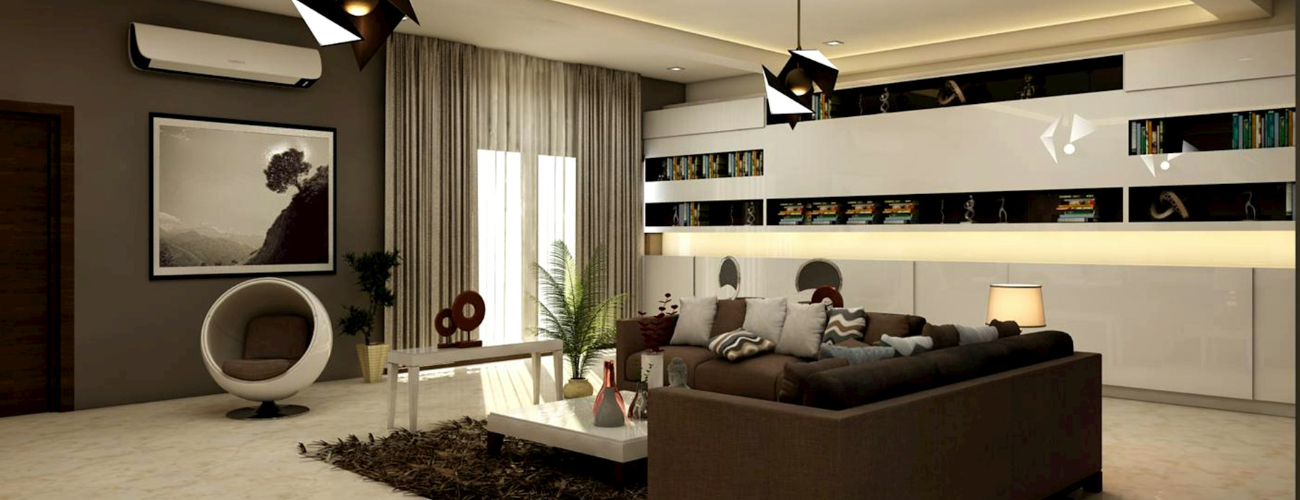
7 Essential Rules of Interior Design: Creating Harmony in Your Home
Interior design is both an art and a science, providing a framework through which homeowners can express their personal style while ensuring their space is both functional and aesthetically pleasing. To help guide your home decoration and remodeling efforts, here are seven foundational rules of interior design. Following these principles will help you create a cohesive and comfortable environment in any room.
Balance:
Balance is key in interior design and involves distributing visual weight across a room to achieve a sense of stability. There are three main types of balance:
- Symmetrical Balance: This is often used in more formal settings and involves mirroring the arrangement of furniture or decor on either side of a central axis.
- Asymmetrical Balance: This approach involves different objects of comparable visual weight to achieve balance without exact duplication, often resulting in a more casual and dynamic space.
- Radial Balance: Everything radiates from a central point, creating a spiraling effect which can be very engaging.
Rhythm:
Rhythm in design refers to the visual flow that guides the viewer’s eye from one design element to another. Rhythm can be created through:
- Repetition: Repeating colors, patterns, or textures to create a cohesive look.
- Progression: Graduating elements, like a series of cushions that go from small to large.
- Transition: Creating a smooth flow, such as a curved line or an arched doorway that leads the eye naturally around the room.
- Contrast: Placing opposing elements next to each other to highlight their differences and create visual interest.
Emphasis:
A focal point or emphasis is crucial in any room, as it gives viewers a place to rest their eyes. Every room should have a main feature, whether it’s a piece of art, a beautiful piece of furniture, or a striking light fixture.
- Ensure that other design elements support but do not overshadow the focal point.
- Position furniture and accessories to draw attention to this central point.
Proportion and Scale:
Proportion and scale involve the relationship between objects within a space.
- Proportion refers to the ratio between the sizes of one part to another or to the whole.
- Scale deals with the size of one object in relation to another or to the space in which it is placed.
- Use furniture and decor that is in proportion to the room’s size and to each other to avoid elements that feel dwarfed or overly bulky.
Harmony and Unity:
Harmony and unity ensure that all parts of your interior design feel cohesive and connected.
- Use a consistent style or theme to unify the space. For example, a Scandinavian style might feature a cool, muted color palette and minimalistic furniture.
- Textural elements should complement each other; rough textures can be balanced with soft, or organic shapes with geometric.
Color:
Color can completely transform a space and evoke emotions, making it a powerful tool in interior design.
- Understand color psychology—warm colors can evoke feelings of warmth and comfort, while cool colors can be calming.
- Use a color wheel to help identify complementary, analogous, or triadic color schemes.
- Consider the 60-30-10 rule: 60% of a dominant color, 30% of a secondary color, and 10% of an accent color.
Details:
The final touches in a room are often what make good design great.
- Attention to detail can mean the difference between a room feeling finished or feeling lacking.
- Consider textures, art, and decorative objects that can add depth and interest.
- Even practical elements like trim or hardware should be considered for their aesthetic contribution to the space.
Conclusion:
These seven rules of interior design provide a foundation for creating thoughtfully designed spaces that are both beautiful and functional. Whether you are redecorating a single room or overseeing a full-scale renovation, keeping these principles in mind will help you navigate the myriad decisions involved in crafting a cohesive and inviting home.